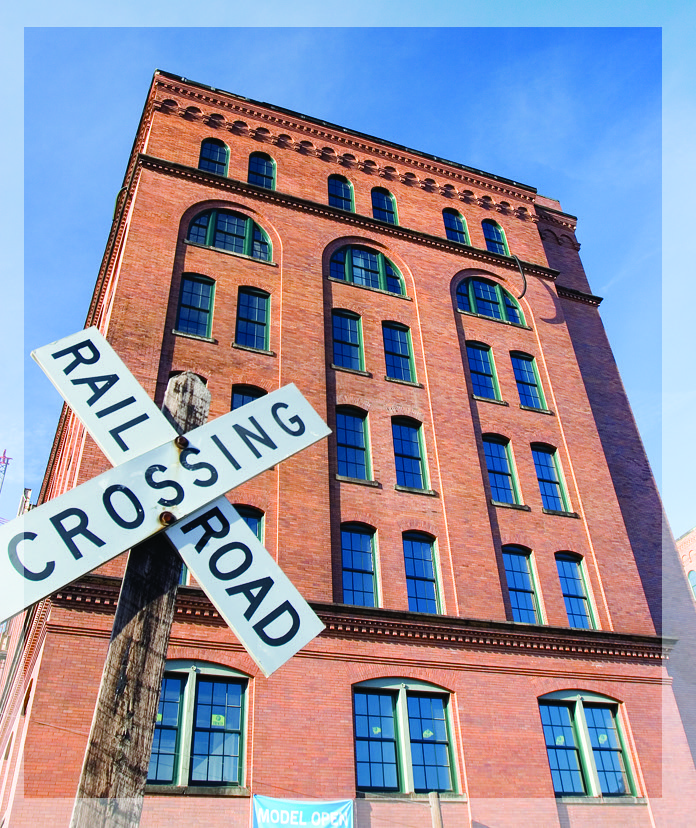
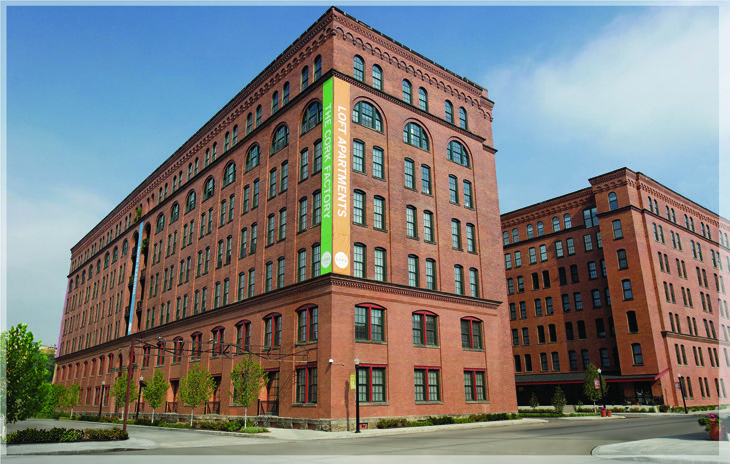
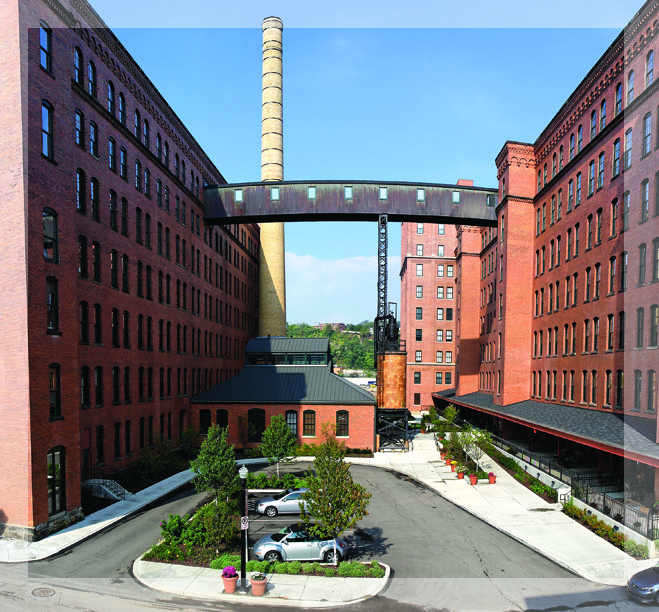
The Cork Factory at 2349 Railroad Street is one of the most recognizable buildings in Pittsburgh’s Strip District. Architect Frederick Osterling designed the Romanesque Revival structures beginning in 1901. The complex grew to 440,000 square feet across three buildings: the original factory in 1901, a warehouse in 1902, and the tower addition in 1913. The Armstrong Cork Company operated here for seven decades, employing up to 1,300 workers at its peak in the 1930s. Armstrong closed operations in 1974, and the buildings sat empty for more than 30 years.
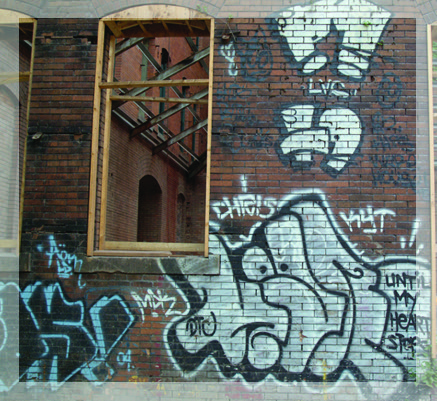
In 2005, Chicago-based McCaffery Interests partnered with the local building owners to convert the complex into 295 luxury loft apartments and retail space. That same year, the Cork Factory was added to the National Register of Historic Places. Graciano Corporation was brought on for the exterior masonry restoration.
Exterior Restoration
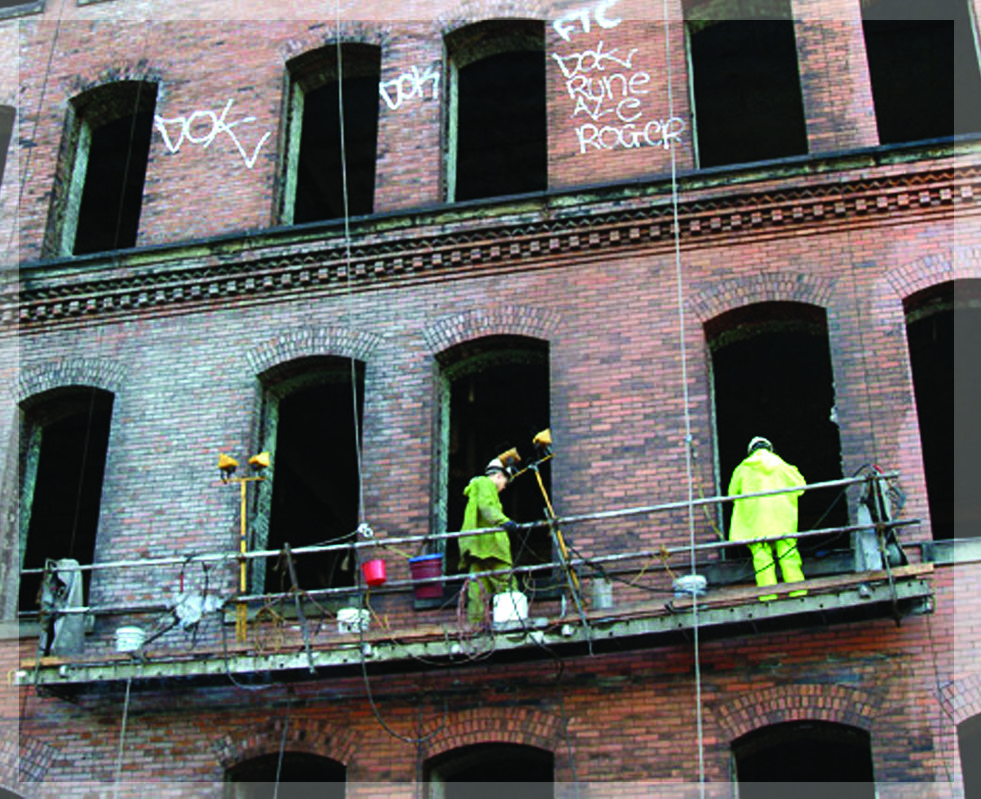
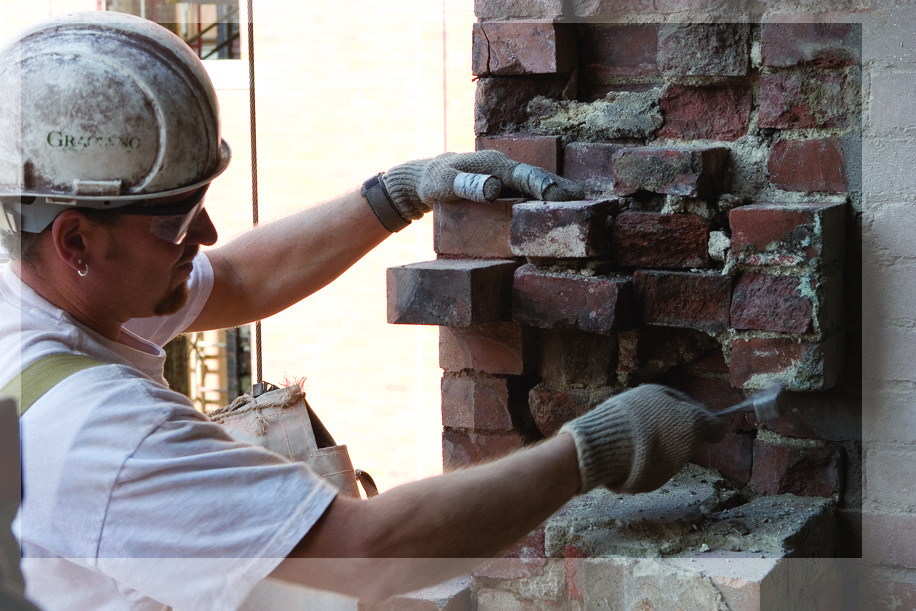
Graciano’s initial scope covered cleaning all exterior brick masonry, stone, and terra cotta surfaces across both buildings. Three decades of abandonment had left exceptionally heavy accumulations of dirt on the facades. Crews treated and cleaned surfaces two or three times to strip all foreign materials. The work also included removing extensive graffiti, spot-pointing masonry joints, removing and replacing damaged brick, patching or replacing stone architectural features, and repairing damaged terra cotta trim on cornices, belt courses, and window sills.
Interior Takeover
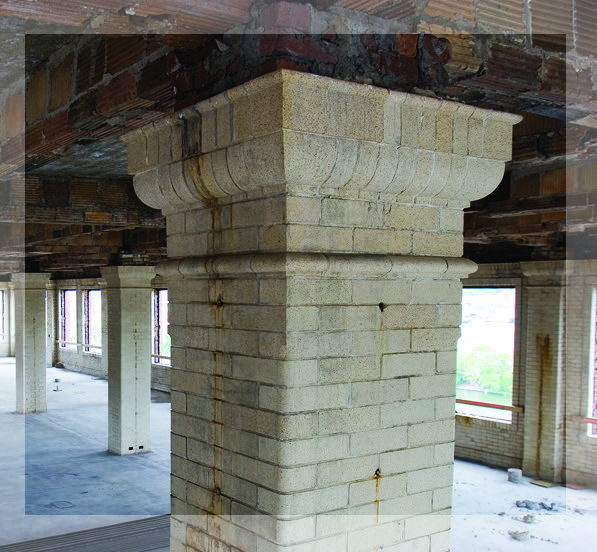
Midway through the project, Graciano was asked to take over interior work from another contractor. Craftsmen were quickly certified in lead abatement. Crews removed paint, dirt, and graffiti from interior surfaces and completed masonry repairs throughout the complex.
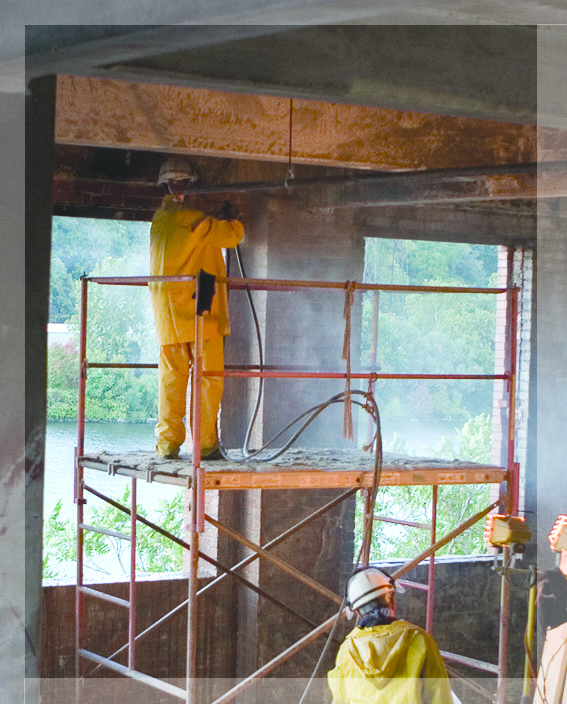
The team then stabilized exposed concrete ceilings, removing spalling concrete from existing rebar and refinishing the surfaces. Interior work also included rebuilding two elevator shafts for new equipment and constructing concrete block walls in the basement to create laundry, storage, and mechanical spaces.
Stack and Reception Building
Graciano encapsulated the complex’s towering brick stack in scaffolding, reconstructed the top three feet of brickwork, replaced metal stabilizer rings, cleaned and repointed the masonry, and capped the stack with stainless steel to prevent water infiltration.
The reception building required two of its three exterior brick walls to be completely rebuilt to match the historic fabric of the surrounding structures. The third wall was refurbished with cleaning and pointing. Interior brick walls were added to define new spaces. As a final assignment, the general contractor asked Graciano to install precast coping around the new in-ground pool and adjoining Jacuzzi.
Award-Winning Restoration
Graciano’s work at the Cork Factory earned a Golden Trowel Award from the International Masonry Institute. The complex opened as loft apartments in 2007 and was designated a Pittsburgh History and Landmarks Foundation Historic Landmark that same year. It remains one of the Strip District’s most prominent examples of historic preservation through adaptive reuse.